
Blog
Global Trade in 2025: How GlobeEasy Helps SMEs Navigate New Trade Realities and Growth Opportunities

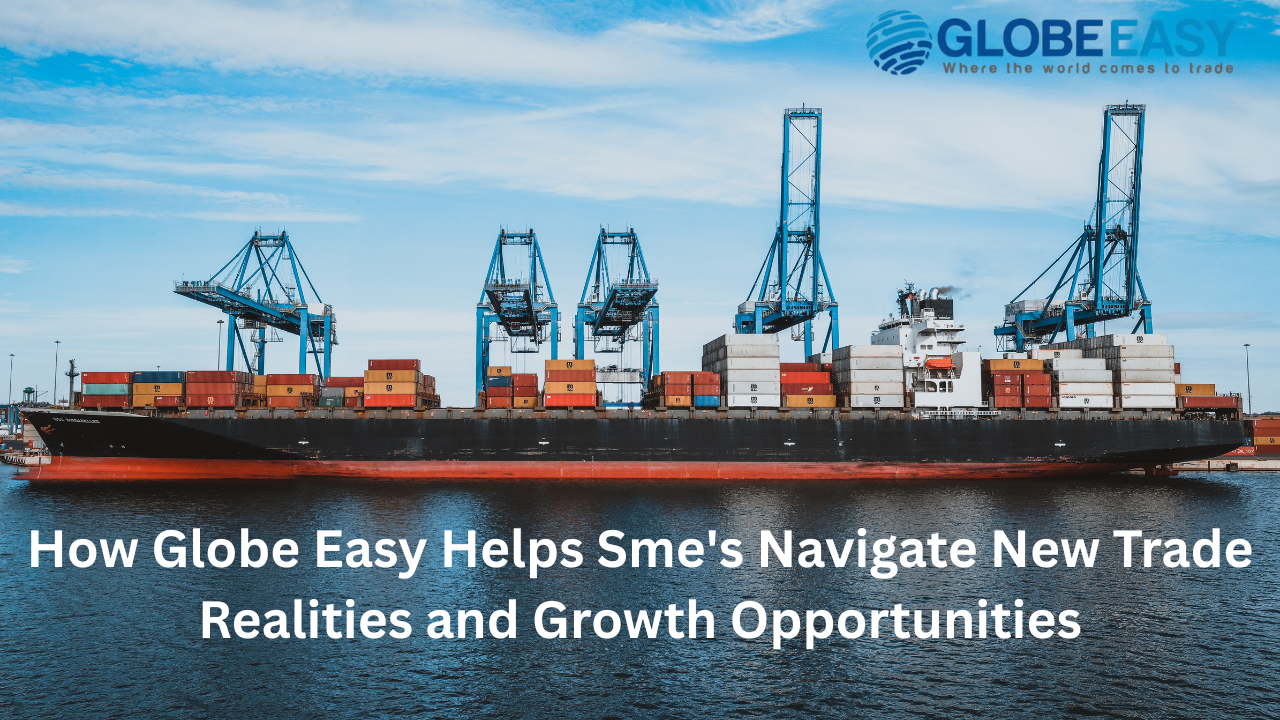
How Globe Easy Helps Sme’s Navigate New Trade Realities and Growth Opportunities
Global trade in 2025 is moving forward, but not in the same way it did a few years ago. While international trade volumes are reaching new highs, the way trade works is becoming more complex. Policies are changing faster, supply chains are shifting, and new regional partnerships are emerging. For small and medium enterprises (SMEs), this creates both opportunity and uncertainty.
To succeed today, exporters and importers must understand what is changing in global trade and how to adapt. This article explains the most important trade developments shaping 2025, why they matter for SMEs, and how GlobeEasy helps simplify export and import in this evolving global environment.
Global Trade Growth in 2025: Strong but Uneven
Despite global challenges, international trade continues to grow in 2025. Trade in goods and services is expanding, supported by recovering demand, digital trade tools, and new market connections. However, this growth is not evenly distributed across regions or industries.
Some economies are experiencing strong import growth, while others are adjusting to slower demand or policy changes. This uneven growth makes it more important than ever for SMEs to diversify markets and avoid depending on a single country or trade route.
What Is Driving Trade Growth in 2025?
Several key factors are supporting global trade expansion:
-
Higher volumes of goods moving across borders, even as prices stabilize
-
Strong growth in services trade such as logistics, digital services, and finance
-
Continued demand from large importing economies like the United States and the European Union
For SMEs, this means opportunity exists, but only for those who stay informed and flexible.
Changing Trade Destinations and Market Patterns
One of the most noticeable trends in 2025 is the shift in export destinations. Traditional trade relationships are being rebalanced as companies rethink sourcing strategies and governments adjust trade policies.
For example, some European exporters are reducing reliance on long-standing markets and exploring alternative destinations. At the same time, large economies continue to increase imports, creating fresh opportunities for exporters from emerging and developing regions.
This shift highlights an important reality: global trade is no longer centered on a few dominant routes. Instead, it is spreading across multiple regions and corridors.
Trade Policy Changes and Their Impact on SMEs
Trade policy remains one of the most influential forces in global commerce. In 2025, exporters face a landscape shaped by tariffs, regulatory changes, and evolving trade agreements.
How Policy Changes Affect SMEs
-
New tariffs can increase costs and reduce price competitiveness
-
Regulatory changes may require additional documentation or certifications
-
Trade negotiations can open new markets or restrict existing ones
For SMEs, these changes can feel overwhelming. Unlike large corporations, smaller businesses often lack dedicated trade compliance teams. This makes access to clear guidance and updated information essential.
Emerging Trade Lanes and Growing SME Confidence
While some traditional markets are becoming more competitive, new trade lanes are opening across Asia, Africa, the Middle East, and Latin America. These regions are seeing rising demand for manufactured goods, raw materials, consumer products, and services.
Many SMEs are becoming more confident about expanding into these markets. Improved logistics networks, digital trade platforms, and better access to information are reducing barriers that once limited smaller exporters.
Why New Trade Lanes Matter
-
Reduced dependence on saturated markets
-
Access to fast-growing economies
-
Opportunities to establish early partnerships
SMEs that act early and understand these trends can gain a strong competitive advantage.
Why Global Trade in 2025 Is Different From the Past
Global trade today operates under very different conditions than it did even five years ago. Several long-term shifts define the current trade environment.
1. Digitization of Trade Operations
Trade is becoming increasingly digital. Documentation, communication, payments, and compliance are moving online, reducing delays and errors. Digital platforms now play a central role in connecting buyers, sellers, and service providers.
2. Rising Importance of Emerging Markets
Emerging economies are no longer just suppliers. They are becoming major buyers, manufacturers, and trade partners. SMEs that understand these markets can unlock significant growth.
3. Rapidly Changing Trade Rules
Trade agreements, tariffs, and compliance standards are changing faster than before. Staying updated is no longer optional for exporters and importers.
4. Growth of Services Trade
Logistics, finance, technology, and trade-related services are growing faster than goods trade in many regions. These services are critical to smooth international transactions.
Together, these changes make global trade more complex, but also more accessible for businesses that use the right tools.
What This Means for SME Exporters and Importers
The modern trade environment presents both clear opportunities and serious challenges for SMEs.
Key Opportunities
-
Entry into new and diversified export markets
-
Increased demand for specialized and niche products
-
Access to digital tools that simplify global trade
Key Challenges
-
Understanding trade regulations across multiple countries
-
Managing logistics, documentation, and compliance
-
Building trust with international buyers and suppliers
-
Keeping up with fast-changing market conditions
SMEs that rely on outdated methods often struggle, while those that adopt structured trade systems move ahead.
How GlobeEasy Helps SMEs Succeed in Global Trade
GlobeEasy is built to support SMEs in this changing trade environment. As a hybrid platform combining a B2B marketplace with a trade operating system, GlobeEasy simplifies export and import at every stage.
Simplified Market Access
-
Connects SMEs with verified buyers and suppliers
-
Reduces the risk of dealing with unknown partners
-
Opens access to multiple regions through one platform
Integrated Trade Operations
-
Supports documentation and compliance guidance
-
Connects users with logistics partners and customs agents
-
Brings essential trade services into one ecosystem
Real-Time Trade Insights
-
Shares up-to-date trade trends and market changes
-
Helps SMEs respond quickly to policy and demand shifts
-
Enables better planning and smarter decisions
Education-First Approach
-
Explains what is happening in global trade and why it matters
-
Helps SMEs understand rules, risks, and opportunities
-
Reduces uncertainty by turning information into action
By combining technology, services, and education, GlobeEasy helps SMEs trade with confidence rather than guesswork.
Why This Matters for the Future of SMEs
Global trade in 2025 is full of opportunity, but only for businesses that adapt. Trade is becoming more regional, more regulated, and more digital. SMEs that understand these shifts and use structured platforms will be better positioned to grow.
Success in international trade now depends on:
-
Staying informed about global trade developments
-
Diversifying markets and reducing dependency
-
Using platforms that simplify complexity and reduce risk
GlobeEasy supports SMEs through every step of the trade journey, making global commerce more transparent, manageable, and achievable.
Conclusion
Global trade is not slowing down in 2025. It is transforming. While challenges exist, the opportunities for prepared SMEs are significant. New markets, digital trade systems, and diversified trade lanes are reshaping how businesses grow internationally.
With the right knowledge and the right platform, SMEs can turn complexity into opportunity. GlobeEasy plays a critical role in this transformation by simplifying export and import, providing trade insights, and supporting SMEs with the tools they need to succeed.
For businesses ready to adapt, 2025 can be a defining year for global growth.

