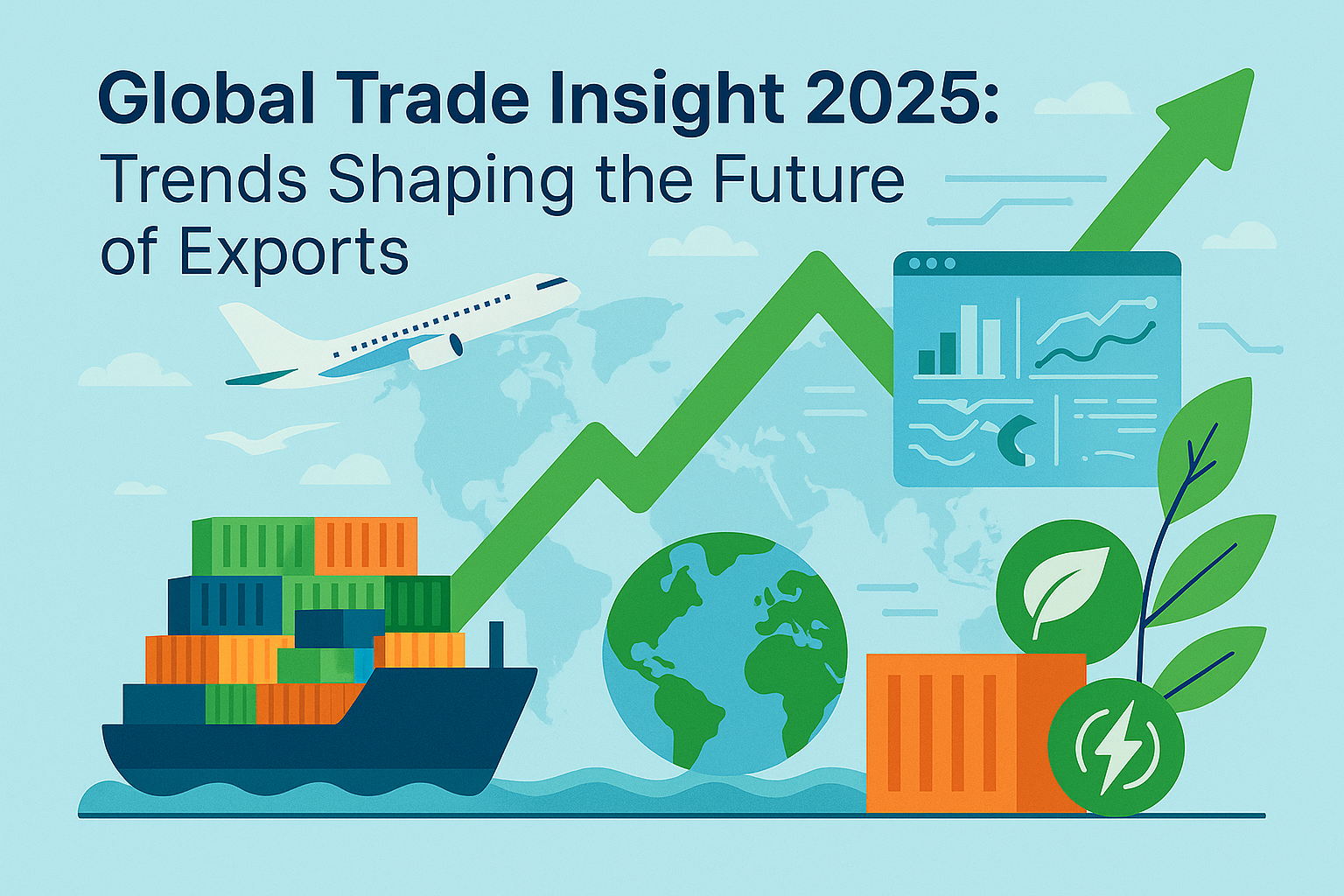
Global Trade Insight 2025
Introduction: A New Chapter in Global Trade
Global trade in 2025 looks very different from what it was even five years ago. The way goods move across borders, how buyers choose suppliers, and the standards exporters must meet have all evolved dramatically. Trade is no longer only about price and speed. Today, it is about resilience, transparency, sustainability, technology, and strategic positioning.
Three powerful forces are reshaping the global trade environment. First, the rapid expansion of artificial intelligence and the digital economy is creating new demand for specialised goods and infrastructure. Second, global companies are redesigning supply chains through nearshoring and diversification strategies to reduce risk. Third, stricter environmental and sustainability regulations are changing who can access premium markets and under what conditions.
This article explores these changes in depth and explains how exporters, manufacturers, and B2B platforms like Globe Easy can successfully adapt. Written in clear, human-friendly language, it aims to provide practical insights, real understanding, and actionable knowledge for anyone involved in international trade.
1. Global Trade in 2025: Growth with a Different Shape
World trade is growing again, but the growth pattern has shifted. While trade volumes are rising, the sectors driving this growth are not the same as before. Service exports are expanding faster than goods, and high-value, technology-oriented products are gaining prominence.
According to international trade reports, global trade surpassed historic levels in 2024 and continued upward momentum in 2025. However, the source of this growth has changed. Traditional bulk commodities are no longer the sole drivers. Instead, advanced manufacturing, digital services, and high-tech goods dominate the expansion.
This shift indicates a deeper transformation. Countries that adjust to new realities will thrive, while those clinging to outdated trade models may struggle.
2. AI and the Digital Economy: A Silent Export Revolution
Artificial intelligence is not just transforming industries; it is reshaping global trade. The demand for AI infrastructure has created a strong need for physical components such as:
- High-performance semiconductors
- Data servers and storage devices
- Networking equipment
- Cooling systems for data centres
- Specialised power systems
Countries involved in the production or assembly of these components are witnessing rapid export growth. Even indirect participants, such as packaging manufacturers and metal fabricators, benefit from this trend.
AI growth impacts global trade in multiple ways. It increases cross-border demand for complex industrial goods and encourages the development of specialised supply chains. Exporters who identify their role in this ecosystem can position themselves for stable long-term demand.
3. Nearshoring and Supply Chain Realignment
The trend of nearshoring has become one of the defining features of global trade strategy. Companies no longer rely heavily on a single country for manufacturing. Instead, they diversify production across multiple regions to reduce vulnerability.
This strategy is known as China+2 or multi-hub sourcing and is becoming standard practice for global brands. The objective is to create flexible and resilient supply chains that can withstand geopolitical tension, natural disasters, or transportation disruptions.
Countries benefiting from this shift include India, Vietnam, Mexico, Indonesia, Turkey, and several nations in Eastern Europe and the Middle East. These regions are seeing an increase in investment, factory expansion, and export opportunities.
For exporters, this shift means buyers are actively searching for new reliable suppliers. This creates an opening for smaller and mid-sized manufacturers to enter global value chains.
4. Sustainability is No Longer Optional
Environmental concerns have moved from discussion tables into law-making. Governments and corporations are now enforcing environmental standards as part of trade regulations. Sustainability is becoming central to export eligibility.
The European Union’s Carbon Border Adjustment Mechanism (CBAM) requires importers to pay a fee based on the carbon emissions associated with products such as steel, cement, fertilizers, and aluminium. This effectively forces exporters to measure and reduce their carbon footprint.
Beyond CBAM, buyers demand proof of eco-friendly practices, ethical labour conditions, and transparent sourcing. Certifications and sustainability reporting are increasingly required during supplier evaluation.
Exporters who invest in cleaner processes and eco-friendly materials not only meet these requirements but also gain access to premium clients and higher margins.
5. Digital Platforms: The New Trade Gateways
In today’s world, most international business begins online. Digital B2B platforms have replaced traditional trade fairs as primary points of discovery. Buyers now search, compare, and evaluate suppliers through digital marketplaces.
Efficiency, visibility, and trust are key factors. Exporters who create strong digital profiles stand a much higher chance of being chosen. High-resolution product images, clear descriptions, certifications, and transparent pricing play a crucial role.
Globe Easy serves as a strategic platform connecting verified exporters to global buyers, enabling faster negotiations and safer transactions. Such platforms act as virtual trade corridors, reducing the barrier to international expansion.
6. How Exporters Can Adapt and Thrive
To succeed in this changing environment, exporters should adopt several practical strategies:
Strengthen Market Awareness
Understand which markets are growing and which are declining. Follow trends in AI, renewable energy, sustainable goods, and emerging consumer demands.
Invest in Digital Branding
Maintain an accurate and professional profile on B2B platforms. Make sure product details, qualifications, and contact information are clear and updated.
Focus on Sustainability
Start with simple steps like reducing waste, switching to eco-friendly materials, and documenting energy consumption. Over time, work toward recognised certifications.
Expand Product Portfolio
Explore adjacent products that complement existing offerings. This increases resilience and opens new revenue streams.
Improve Logistics Planning
Work closely with reliable shipping partners and prepare alternative routes to minimise delays and manage cost fluctuations.
7. The Role of Globe Easy in the Modern Trade Ecosystem
Globe Easy plays a vital role in bridging gaps between global demand and supply. By providing verified listings, transparent supplier information, and compliance-focused infrastructure, the platform enhances trust and efficiency.
It acts as a knowledge hub as well, offering trade insights, updates, and guidance to exporters navigating complex regulations. By integrating ESG data, certifications, and product verification, Globe Easy transforms the exporter-buyer relationship into a structured and reliable system.
8. Key Opportunities for Exporters in 2025
- AI infrastructure supply chains
- Sustainable packaging and materials
- Renewable energy components
- Organic and eco-friendly consumer goods
- Digital services and specialised manufacturing
These segments show continuous demand and resilience against economic fluctuations.
9. Challenges to Prepare For
Even with opportunity, challenges remain:
- Frequent regulatory changes
- Geopolitical risks
- Currency volatility
- Logistics interruptions
- Competitive pricing pressure
Proactive planning and strategic foresight can help mitigate these risks.
10. The Future Outlook: Smart, Sustainable, Strategic
The future of trade is more intelligent, transparent, and responsible. Companies that combine technology adoption with sustainability values and strong digital presence will lead. Adaptive exporters who understand the new market logic will emerge as global leaders.
The world is moving toward trade systems that reward innovation, sustainability, and efficiency. Exporters who recognise this transition early will not only survive but expand significantly.
Conclusion
Global trade today is an ecosystem shaped by technology, environmental awareness, and shifting supply chains. The businesses that succeed are those that go beyond merely selling products. They build relationships, demonstrate responsibility, and adapt to emerging global standards.
For exporters leveraging Globe Easy, the time to act is now. The opportunity is real, but it belongs to those who prepare strategically. By integrating sustainability, embracing digital trade tools, and staying informed about global trends, exporters can secure their place in the new era of international commerce.
The world of trade has changed, and a new chapter has begun. The question is not whether trade will grow, but who will lead it.