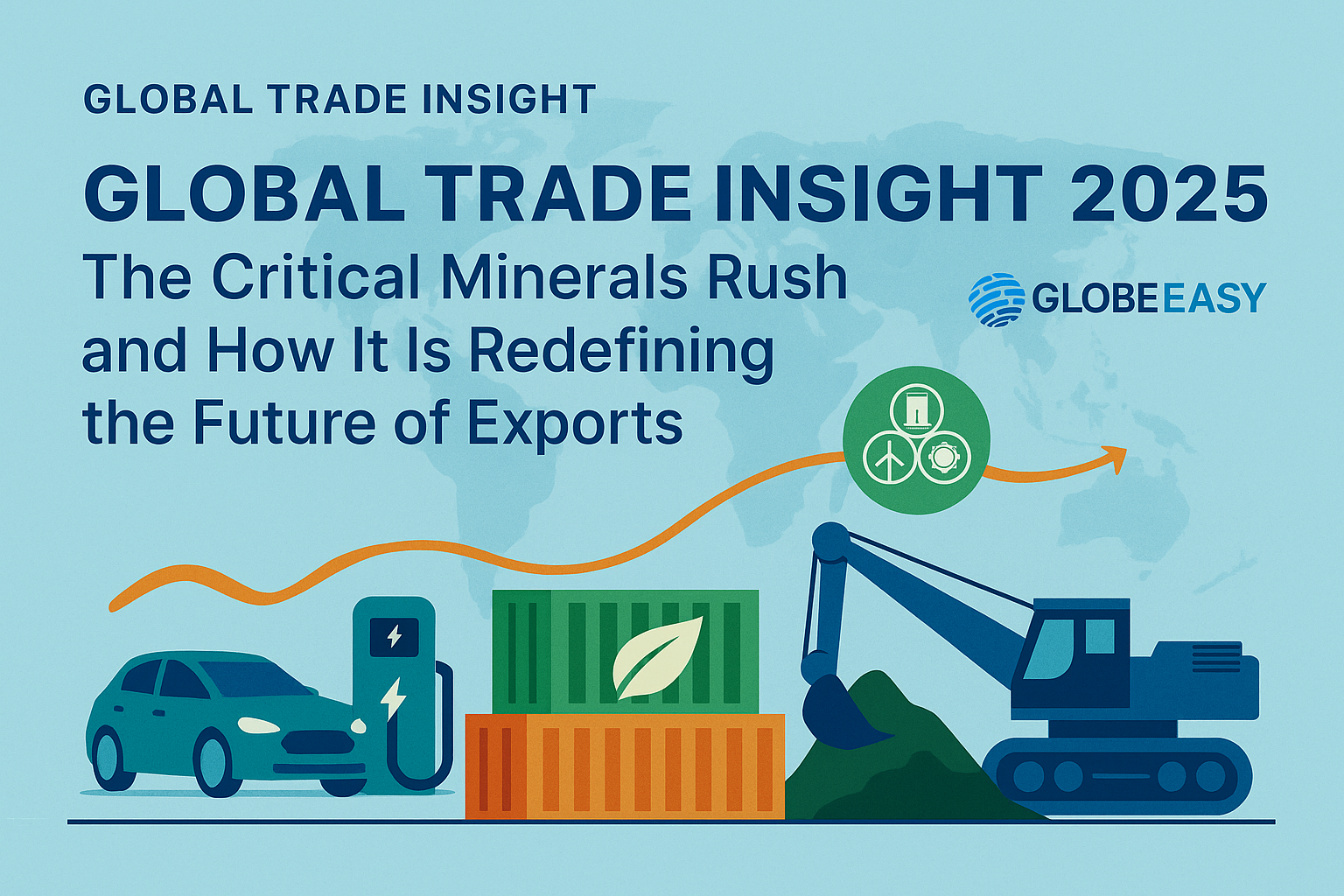
Critical Minerals Trade 2025 is transforming the structure of global exports, redefining supply chains, and creating a new era of strategic resource-driven international commerce.
Introduction: A Silent Trade Revolution is Unfolding
In 2025, one of the most powerful forces reshaping global trade is not oil, not consumer electronics, and not traditional manufacturing. It is something far deeper and more strategic: critical minerals. These essential raw materials, used in clean energy technologies, electric vehicles, batteries, defence systems, and advanced electronics, are becoming the backbone of the global economy. Nations, corporations, and investors are racing to secure supply chains for these resources, creating a new trade era defined by geopolitical strategy, sustainability, and long-term resource security.
This growing demand for lithium, cobalt, nickel, rare earth elements, graphite, and copper is changing how the world trades, who controls power, and which countries emerge as future export leaders. Unlike short-term trends, the critical minerals boom is reshaping the global trade structure itself.
For exporters, manufacturers, policymakers, and platforms like Globe Easy, this transition presents a rare but urgent opportunity. Those who understand this shift can align early and gain dominance in decades-long supply contracts. Those who ignore it risk falling behind.
This article explores the critical minerals boom in simple terms, breaks down the real impact on global trade, and provides practical insights for businesses looking to adapt and thrive.
1. What Are Critical Minerals and Why Are They So Important?
Critical minerals are natural resources that are essential for the functioning of modern technology but face high risk of supply disruption. They are not rare in availability alone; they are rare in accessibility, stability, or political control.
These minerals power technologies such as:
- Electric vehicle batteries
- Solar panels and wind turbines
- Smart grids and energy storage
- Defence and aerospace equipment
- Smartphones and advanced semiconductors
The global push toward green energy and net-zero targets has created unprecedented demand for these raw materials. Every electric car, renewable energy plant, and advanced electronic device increases dependence on them.
This dependency has turned critical minerals into strategic trade assets similar to oil in the 20th century.
2. The Global Demand Explosion in 2025
In 2025, global demand for critical minerals has surged due to aggressive investment in clean energy infrastructure and electric mobility. Governments are focusing on decarbonisation goals, which require massive quantities of battery-grade raw materials.
Electric vehicle production alone consumes several times more minerals than traditional combustion vehicles. A single electric car uses up to six times more mineral input than a standard petrol-powered vehicle. The expansion of solar farms and wind installations further intensifies this demand.
Global energy and automotive companies are now securing long-term contracts with mineral-producing nations, shifting global trade power maps.
3. The New Trade Map: Who Controls the Minerals?
The global critical minerals supply chain is highly concentrated. A few countries dominate mining, processing, and refining stages.
China leads in rare earth processing and lithium refining. Democratic Republic of Congo supplies most of the world’s cobalt. Australia and Chile hold major lithium reserves. Indonesia has strong nickel production capacity. India, Brazil, and African nations are working to expand their positions.
This concentration creates significant trade vulnerability. Any political instability or logistics disruption can impact the entire global clean energy economy.
As a result, importing nations are now investing heavily in diversifying supply chains, creating new trade partnerships, and encouraging domestic mineral exploration.
4. How the Critical Minerals Boom Impacts Global Trade
This minerals rush has several direct consequences for international trade:
- New export corridors are forming between mineral-rich countries and manufacturing hubs
- Long-term contracts are replacing spot-market deals
- Strategic stockpiling is becoming common
- Processing and refining capacity is gaining more value than raw mining alone
Countries that only export raw minerals may generate revenue, but nations that invest in refining and value-added processing will capture far greater economic benefits.
For exporters, this signals the importance of moving up the value chain rather than remaining basic raw material providers.
5. The Sustainability Dilemma
Ironically, the minerals needed for green energy also pose environmental concerns. Mining operations can lead to deforestation, water pollution, and ecosystem damage if not managed responsibly.
As consumer awareness grows, buyers are demanding minerals sourced through ethical and sustainable processes. Certifications, environmental impact reports, and transparent sourcing are becoming mandatory rather than optional.
This pushes exporters to adopt cleaner mining technologies and more responsible sourcing practices.
6. Opportunities for Developing Economies
Developing nations with mineral reserves now hold significant power. Instead of exporting unprocessed ore, these countries are beginning to build processing facilities, industrial parks, and logistics hubs to add value domestically.
This move strengthens local economies and positions these countries as strategic global suppliers rather than resource colonies.
India, Africa, and Southeast Asian regions are emerging as key players in this transformation.
7. What This Means for Exporters and Suppliers
Exporters must look beyond traditional goods. Opportunities now lie in:
- Supplying machinery and equipment for mining operations
- Packaging and logistics services for mineral shipping
- Processing chemicals and refining technology
- Supporting infrastructure materials
This shift also creates roles for B2B platforms in connecting buyers to reliable suppliers in this new ecosystem.
8. The Role of Globe Easy in the Critical Minerals Trade Shift
Globe Easy can position itself as a bridge connecting mineral-based exporters with global manufacturing buyers. By providing verified supplier platforms, digital compliance systems, and integration with logistics networks, it can ease the complexity of this new trade era.
The platform can also support exporters in highlighting sustainability practices and compliance readiness, giving buyers confidence in sourcing decisions.
9. Challenges Ahead
Even with opportunity, challenges include regulatory changes, export restrictions, trade sanctions, and environmental compliance pressures. Exporters must remain agile and informed.
10. Preparing for the Future
To thrive, businesses should:
- Invest in sustainability and transparency
- Strengthen partnerships
- Diversify product offerings
- Stay informed on global trends
The critical minerals trade is not temporary; it is a structural shift that will define global commerce for years.
Conclusion: A Strategic Trade Revolution
The critical minerals boom is redefining global trade, power structures, and export strategies. It is creating opportunities for nations and businesses willing to adapt. For Globe Easy and its ecosystem, this trend represents a chance to lead the next chapter of sustainable, strategic global commerce.
Those who act now will not just participate in the future of trade, but shape it.