
Blog
Global Trade Insight 2025: A Deep Analysis of New Trade Opportunities and How Globe Easy Helps Me Navigate Them

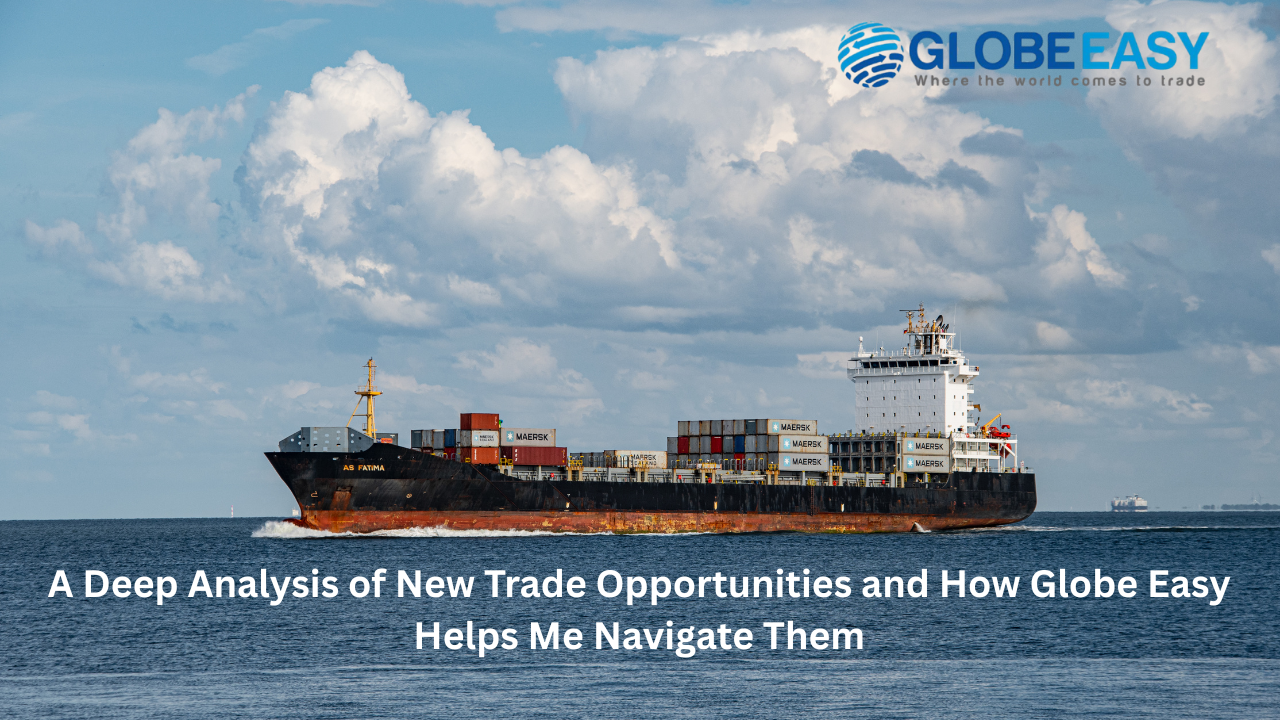
Global trade in 2025 is undergoing major transformation. Exporters, importers, and SMEs across the world are experiencing a new era of trade that is shaped by technology, AI-driven demand, supply-chain reconfigurations, sustainability regulations, and the rise of emerging markets as powerful exporters and consumers. These rapid shifts can be overwhelming for traditional SMEs, but for those who understand what is happening and how to adapt, the opportunities have never been greater.
The purpose of this Trade Insight is to help SMEs, new exporters, and global traders clearly understand what is happening right now in global trade. It presents the biggest developments that matter today, breaks them down in simple language, and shows how a modern hybrid trade operating system like Globe Easy helps me stay competitive and trade globally with ease.
This article is designed to educate, inform, and prepare SMEs for the new wave of global commerce. It also explains how the right tools, knowledge, and platforms can turn global challenges into profitable export opportunities.
1. Global Trade in 2025 Is Growing Faster Than Expected
After years of uncertainty caused by geopolitical conflicts, supply-chain disruptions, inflation, and fluctuating demand, global trade in 2025 is showing significant recovery. Multiple international organizations, including the World Trade Organization and UNCTAD, project that merchandise trade is set for strong growth this year.
Several factors are driving this recovery:
-
The rise of AI-related goods, electronics, and advanced manufacturing.
-
Trade expansion among emerging markets across Asia, Africa, and Latin America.
-
High demand for raw materials, industrial components, and green technologies.
-
Increased investment in digital trade and e-commerce for B2B transactions.
This resurgence is good news for SMEs, because the global demand for products is expanding across categories. However, many small exporters still struggle due to lack of reliable information, limited access to global buyers, complex paperwork, and rising logistics costs.
This is exactly where Globe Easy helps me. By bringing marketplace access, trade support services, logistics partnerships, compliance assistance, and export education into one platform, Globe Easy helps me take full advantage of rising global demand without needing a large team or complex infrastructure.
2. AI-Driven Demand Is Reshaping Trade Patterns Worldwide
One of the strongest contributors to global trade growth in 2025 is the high international demand for AI-related goods. Exports are booming in categories such as semiconductors, chips, server components, computing equipment, sensors, smart devices, and telecom hardware. Countries like Taiwan, South Korea, Vietnam, Malaysia, India, and China are reporting major increases in export orders from the United States, Europe, and other regions.
This shift has two important implications for SMEs:
First, SMEs that manufacture or supply components, raw materials, printed circuit boards, cables, power units, and supporting technology products have a major opportunity to tap into global demand. The supply chains feeding AI production need thousands of smaller suppliers.
Second, even SMEs outside the electronics space will feel the effects, because AI adoption is increasing demand for packaging, logistics services, raw materials, and supporting goods across multiple industries.
Globe Easy helps me participate in this trend by offering access to global buyers who source both finished technology products and supporting materials. It also enables SMEs to understand which markets are increasing AI-related imports and which sectors have shortages, helping exporters target the right countries.
3. Global Supply Chains Are Being Rebuilt Through Nearshoring and Friendshoring
Over the past few years, geopolitical tensions, shipping disruptions, and economic complexities have pushed companies to rethink their supply chains. In 2025, this trend is accelerating and taking shape in the form of nearshoring, friendshoring, and multi-regional sourcing.
Nearshoring means companies source goods from countries geographically closer to them.
Friendshoring means they source from politically or economically aligned countries.
This change is creating new trade corridors. For example:
The United States is increasingly sourcing from India, Mexico, and Southeast Asia instead of relying heavily on China.
Europe is sourcing more from Eastern Europe, Turkey, India, and Africa.
Middle Eastern markets are increasing imports from South Asia, Africa, and Eastern Europe.
For SMEs, this means new demand is emerging from regions that were not historically major trade partners. New buyers are actively looking for alternative suppliers who are reliable, transparent, and compliant.
Globe Easy helps me navigate these new supply-chain shifts by giving access to updated buyer demand trends, region-wise opportunities, and a marketplace where new buyers from emerging corridors search for trusted suppliers. The platform makes it easy for SMEs to connect with buyers in markets they may have never considered before.
4. Sustainability Regulations Are Reshaping Product Demand
One of the most important changes in global trade is the shift toward sustainable, eco-friendly, and ethically sourced products. Many countries across Europe, North America, and Asia are enforcing stricter sustainability regulations that directly affect what products can be exported or imported.
This includes:
Stronger rules on packaging waste and plastic use
Legal requirements for recycling and compostability
Mandatory sustainability reporting for imported goods
Certification requirements related to environmental impact
Ethical sourcing and traceability of raw materials
These regulations have increased demand for biodegradable packaging, paper-based alternatives, plant-based disposables, natural fibers, recycled materials, and sustainably produced goods.
For Indian SMEs especially, this trend offers a competitive advantage because India is a leading producer of eco-friendly materials such as bagasse, bamboo, paper, areca, jute, and organic textiles.
Globe Easy helps me stay compliant with these new rules by offering information, supplier access, documentation support, and verified service providers for testing, certification, and compliance. The platform also makes it easier to reach buyers actively searching for sustainable products.
5. Digitalization Is Becoming the Standard for Global Trade Operations
One of the biggest challenges faced by SMEs is managing export operations manually. Traditional exporters often struggle with documentation, communication, payment settlement, logistics coordination, certification, and compliance tracking. These inefficiencies create delays, increase costs, and cause shipment errors.
In 2025, global trade is becoming increasingly digital. Buyers expect:
Digital catalogs
Clear documentation
Accurate product data
Quotation transparency
Online payments
Tracking visibility
Real-time communication
To remain competitive, SMEs must adopt digital tools that automate, simplify, and optimize their trade processes.
This is where Globe Easy helps me. The platform functions as a complete trade operating system, offering tools for:
Buyer communication
Seller verification
Product listing
Documentation management
Certification and compliance support
Logistics bookings
Freight comparison
Sourcing support
Exporter education
This makes exporting easier, faster, and more cost-effective even for small companies.
6. Emerging Markets Are Becoming Powerful Trade Consumers
While traditional markets like the United States and Europe still dominate global imports, emerging markets are growing faster than ever. Countries across Africa, the Middle East, Southeast Asia, and South America are increasing imports due to economic growth, population expansion, industrialization, and rising consumer demand.
Demand is strong in sectors such as:
Food products
Packaging materials
Construction materials
Household goods
Clothing and textiles
Machinery and spare parts
Sustainable products
These markets are often less competitive than established destinations, allowing SMEs to enter more easily and build long-term partnerships.
Globe Easy helps me explore these emerging market opportunities by providing access to verified buyers, trade data, and country-specific insights. This helps SMEs diversify their markets instead of relying on only one or two destinations.
7. Logistics and Customs Complexities Require Smarter Navigation
One of the biggest obstacles for SMEs in global trade is navigating logistics and customs. Many exporters struggle with shipping rates, paperwork, customs clearance, unpredictable delays, documentation errors, and lack of insurance or inspection services.
In 2025, freight prices are fluctuating, customs laws are changing frequently, and new digital systems are being introduced. Without support, SMEs lose time and money trying to manage these operations on their own.
Globe Easy helps me overcome these challenges by giving access to logistics partners, customs brokers, freight agents, warehousing companies, inspection agencies, and insurance providers. This eliminates the need to find separate vendors and helps SMEs streamline their entire shipment process in one place.
8. High-Growth Export Categories for 2025
Based on global import trends, digital marketplace data, industry reports, and buyer demand analysis, the following categories show strong growth this year:
Technology and AI-Related Products
Electronics components
Cables, chargers, chips, and accessories
Small machinery and automation equipment
Eco-Friendly and Sustainable Products
Paper and kraft packaging
Biodegradable tableware
Plant-based and compostable products
Reusable bags and organic textiles
Food and Agricultural Exports
Indian spices
Millets, pulses, and grains
Ready-to-cook and ready-to-eat foods
Frozen fruits and vegetables
Lifestyle and Consumer Goods
Home décor and handicrafts
Natural personal care products
Lightweight apparel and cotton materials
Industrial and B2B Supplies
Tools and hardware
Construction materials
Industrial chemicals and raw materials
Globe Easy helps me understand which product categories are trending, which markets import them the most, and how I can position myself as a competitive supplier.
9. Strategic Recommendations for SMEs in 2025
To take advantage of the opportunities available today, SMEs must adapt their export strategy. The following recommendations are essential for success:
-
Focus on products with strong global demand rather than trying to offer too many categories.
-
Invest in stronger product presentation using digital catalogs, videos, and certifications.
-
Build relationships with multiple buyers instead of depending on a single customer.
-
Explore emerging markets where competition is lower and growth is higher.
-
Use digital tools to manage compliance, logistics, and communication.
-
Prioritize transparency and reliability to build trust in global markets.
-
Stay updated with global trade insights and market shifts.
Globe Easy helps me execute these strategies efficiently by offering a unified platform that supports discovery, communication, operations, and knowledge.
10. Why Globe Easy Is a Powerful Solution for Modern SMEs
The global trade environment today rewards exporters who are informed, digital, organized, compliant, and responsive. Traditional methods and outdated tools make it difficult for SMEs to compete with larger companies.
Globe Easy helps me by offering:
A hybrid B2B marketplace for global buyer-seller connection
A trade operating system with tools for documentation, logistics, certification, and operations
Access to third-party services like inspection, freight, customs, and insurance
Support for compliance and export readiness
A knowledge hub with trade insights, education, and market updates
An ecosystem designed specifically for SMEs rather than large corporations
This combination makes Globe Easy one of the most powerful and accessible export platforms for entrepreneurs, manufacturers, traders, wholesalers, and small businesses that want to scale globally.
Final Insight: 2025 Is the Best Time for SMEs to Go Global, and Globe Easy Helps Me Take the Right Steps
The global trade world in 2025 is a blend of massive opportunity and rapid transition. Demand is rising in multiple sectors, new markets are opening, supply-chains are being rebuilt, and global buyers are actively searching for reliable suppliers from emerging countries.
However, the environment is complex, competitive, and filled with regulatory and operational challenges. SMEs cannot depend on outdated methods if they want to compete internationally.
This is why platforms like Globe Easy are essential. They combine knowledge, technology, marketplace access, logistics support, and compliance tools into one unified ecosystem that enables even the smallest business to export and import with confidence.
In simple terms, Globe Easy helps me understand the global trade world, stay informed about major developments, access better opportunities, manage complex operations, and build a strong export business that can grow sustainably.
With the right tools and insights, 2025 can be a breakthrough year for SMEs across India and around the world.

